Florida's Attorney General Says an Unregistered SBR Is Not a State Crime
Source: The Firearm Blog (Nov 2026)
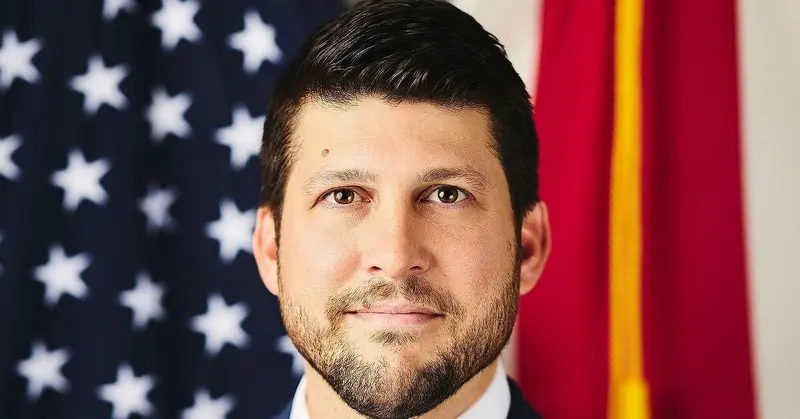
Image: Florida Office of the Attorney General / The Firearm Blog
UPDATE — this follows our October 16 report on a single Florida state attorney telling his own circuit that a missing tax stamp was not a crime; a memo from the attorney general is that position made statewide. In a memo dated November 6, 2026 and sent to police and prosecutors, Florida Attorney General James Uthmeier concluded that law-abiding Floridians do not need NFA approval, registration or a tax stamp for a short-barreled rifle or shotgun to be legal under state law.
Owning an SBR or an SBS in Florida is a second-degree felony, with one exception — guns “lawfully owned and possessed under provisions of federal law”. Since ATF stopped enforcing NFA registration, that exception stopped having an obvious answer. It matters that this is guidance and not a statute or a ruling: judges need not follow it, and Florida's elected state attorneys, not the AG, run most trial-court prosecutions, so charging decisions remain mostly theirs. The memo holds only “so long as no taxes are imposed on SBRs and SBSs”.
The background is federal. Last year's One Big Beautiful Bill Act cut the NFA's making and transfer taxes to $0 on SBRs, SBSs, suppressors and AOWs. On August 5 a federal judge in Texas ruled in Silencer Shop Foundation v. ATF that with no tax left to collect, the NFA's approval and registration requirements rest on no power Congress has, and the government did not appeal. The injunction covered only the plaintiffs and their members and customers, but on October 9 ATF stopped enforcing those requirements for everyone.
ATF's FAQ says it “cannot opine” on whether an unregistered item held under its non-enforcement policy is lawfully held under federal law — which, in Florida, is the whole question. The memo reads Florida's exception to mean state law does not separately ban what federal law allows, leans on Rinzler v. Carson, a 1972 Florida Supreme Court decision, and argues that a standalone state ban “would likely fail Bruen's test”. Florida's destructive-device law, whose definition sweeps in short-barreled guns with a bore of a half-inch or more — a 12-gauge SBS included — is read as not applying, because it only punishes unlawful possession.
Two limits survive. ATF still wants a Form 20 before an SBR or SBS crosses state lines, registered or not, with the other state's law applying on arrival. And none of it is permanent: ATF says enforcement could resume if Congress restores the tax, if the Texas injunction is overturned or if the Justice Department rescinds its policy, and unregistered guns would not be automatically grandfathered, though the U.S. attorney general could hold an amnesty. Under the memo, merely having an SBR or SBS is not grounds to stop or search someone, spotting one during an otherwise lawful encounter is not by itself enough to seize it, the AG's office will not defend a conviction where missing NFA paperwork is the only basis, and Florida's preemption law keeps cities and counties from writing their own rules. Prohibited persons, federal school-zone and federal-building restrictions are unchanged.
Get this every Thursday. The week in guns, booze and tobacco, in one quick read.
Comments
No comments yet - be the first to post one.
More from Firearms
All Firearms
The Week In Guns, Booze & Tobacco. In One Quick Read.
The stories that actually mattered, from ATF moves to industry money to what everyone's talking about. Every Thursday. No junk.
Unsubscribing is one click — the link is in every edition.
We store your address to send the newsletter and nothing else.